Little Travel Co.

The Little Travel Consultant. Helping You Create Memories. Based in Whitby, Ontario, Canada. The Little Travel Consultant is affiliated with Nexion Canada, ULC 100-235 North Centre Rd, London, On N5X 4E7 HQ Phone 519-660-6966 TICO Reg# 1549342 kate@littletravel.co ~~~ www.littletravel.co

Sunday, 26 February 2017

Scandinavian Natural Wonders: Best Places to Visit in Scandinavia

Scandinavian Natural Wonders: Best Places to Visit in Scandinavia

The magic and beauty of Scandinavia will take your breath away! Norway, Finland, Iceland and Sweden are all home to some of the most breathtaking natural scenery in the world. Each country has its own unique way of delivering that ‘wow’ factor you’re looking for
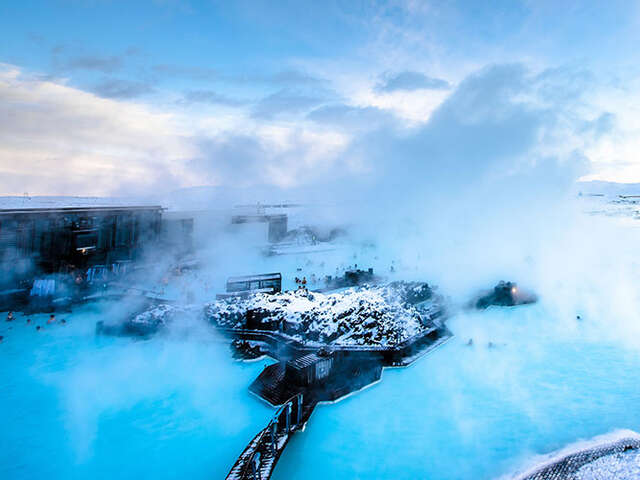
Iceland’s Blue Lagoon
Reykjanes Peninsula is known for its lava fields, rugged landscapes and hot springs. It’s also home of the famous Blue Lagoon, named one of National Geographic’s 25 wonders of the world in 2012. It’s a wonderfully warm, mineral rich geothermal pool of sea water sitting right in the middle of a huge 800- year-old lava field. We highly encourage you to take a soak in this very special place.
The Northern Lights in Finland
The Aurora Borealis, also known as The Northern Lights, is nature’s most incredible light show. The burst of colourful flickering lights in the night sky is viewable on about 200 nights a year, and it can be seen from a wide range of places from igloos to luxury suites or even boat cruises. It’s truly a dazzling sight to behold.
Sweden’s Stockholm Archipelago
A few minutes away from Stockholm, this cluster of 30,000 islands, islets and rocks blends with rocky cliffs, wooded islands and sandy beaches to create a truly beautiful and diverse landscape. Some islands are uninhabited, while others are home to active communities both new and ancient. Visitors enjoy sight-seeing, shopping, and fresh, local cuisine lovingly prepared in charming cafes.
The Majestic Fjord Region in Norway
Visit the fjord region of Western Norway to see narrow fjords cut into tall mountains. Waterfalls cascade magnificently down mountainsides and the glaciers stand firm, never melting. See the seals, eagles and whales who make their homes here and enjoy incredible food made from local produce.
Norway’s Waterfalls
Norway is home to many magnificent waterfalls, but the “Seven Sisters” are among the most photographed and admired in Geirangerfjorden. They are more visible during May through July when the snow melts and are best seen by taking a boat trip. The legend is that the “Seven Sisters” were all single and the waterfall on the other side of the fjord is “The Suitor” whose attempts to court the sisters failed.
No matter where you choose to travel, the scenery will not disappoint. Nobody puts on a show quite like mother nature!

Kristen Gilbert - As a Digital Content Copywriter at Collette, Kristen has travelled extensively. When she’s not busy writing about fabulous tours, she’s dreaming of being in a place where she can sip an umbrella drink with her toes in the sand and a good book in her hand.
Blog copy used with permission from Collette.

Sunday, 19 February 2017

Planning a Trip to the Galapagos Islands

 The Galapagos Islands are one of the most ecologically extraordinary places on the planet. The ecosystem that inspired Darwin – now a protected part of our world heritage - continues to fascinate. Free and fearless animals, different from any others found anywhere else in the world, awe visitors who make the journey to this remote destination.

If you're thinking about a trip to the Galapagos, here are some tips for your planning:
What makes the Galapagos Islands so special?
The Galapagos Islands are both a UNESCO World Heritage Site and a World Biosphere reserve, the second largest in the world. Isolated and remote with a rich ecosystem, the archipelago is a living museum of natural history.
The pivotal moment came in 1835, when Charles Darwin visited the islands. What he discovered among the wildlife, related to - but very different from - any creatures found elsewhere, inspired his theory of evolution and the origin of species. Darwin's theories shocked the scientific world of the 19th century and put the Galapagos Islands on the map and on the lips of generations of curious nature lovers.
The Galapagos Islands have been described as one of the most unique, scientifically important, and biologically outstanding areas on earth.
Where are the Galapagos Islands?
The Galapagos Islands are part of the South American country of Ecuador, but are hundreds of miles west of continental Ecuador in the Pacific Ocean. They form an archipelago of volcanic islands on both sides of the Equator. Thirteen large islands, six lesser ones, more than 40 islets and their surrounding waters form an Ecuadorian province, a national park, and a biological marine reserve.
How did they get their name?
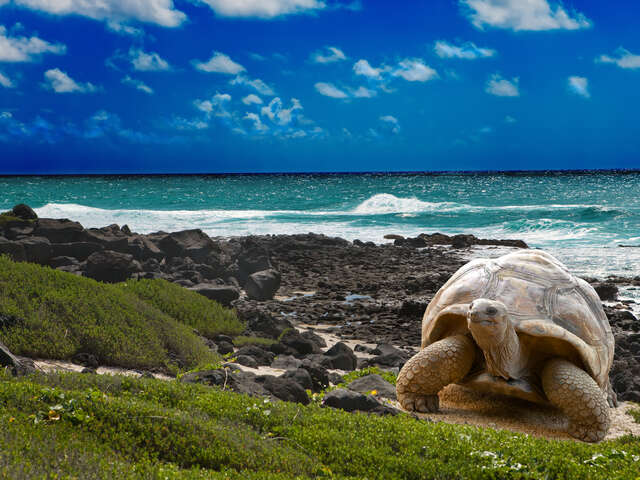
The most symbolic creature of the islands is the extraordinary, giant Galapagos tortoise. Its magnificent shell reminded explorers of a British horse riding saddle, which in Spanish is called 'Galapagos'.
When should I go?
Because the Galapagos is so close to the equator, it's a sunny year round destination. The average year-round temperature is 24°C. (76°F) with a rainy season in the early months of the year.
North Americans are more familiar with a 'four season' life cycle of wildlife, but in the Galapagos Islands, there are natural wonders year round.
Here are some highlights of what you may experience at different times in the Galapagos Islands:
January
· Marine iguanas get a bright coloring to attract mates.
· Hatching of Giant tortoises' eggs.
February
· Greater flamingos start nesting.
· Penguins migrate to cooler waters.
March
· Frigate birds mating season starts.
· Perfect time for snorkeling.
April
· Rainy season comes to an end.
· Sea turtles, marine iguanas and land iguanas nesting.
May
· Waved albatross lay eggs.
· Blue-footed boobies begin their world-known courtship.
June
· Whale shark and humpback whale sightings possible
· Giant tortoises migrate to lowlands searching for good nesting-places.
July
· Start of sea lion breeding season.
· Lava lizards mating season.
August
· Frigatebird chicks are hatching.
· Sea lions give birth during this time.
September
· Galapagos penguins courtship
· A good month to see baby sea lions.
October
· Blue-footed booby chicks can be seen.
· Galapagos fur sea lions' mating season.
November
· Chance of seeing whale sharks
· Green sea turtle mating season starts.
· Great for swimming and snorkeling with baby sea lions.
December
· Start of the warmer season.
A trip to the Galapagos Islands to get up close to extraordinary wildlife in one of the world's remaining pristine environments is on many nature lovers' travel bucket lists. For many, it's not just a once-in-a-lifetime experience, but life changing.
Start your Trip!

Sunday, 12 February 2017

Celebrate Music and Modern Architecture in Hamburg


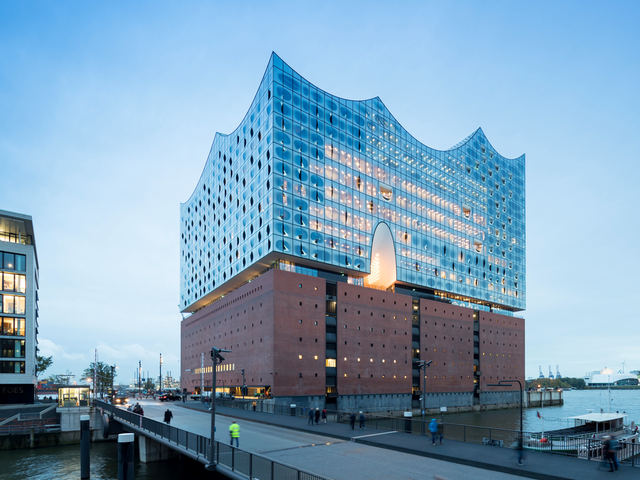
The landmark, modernist Elbphilharmonie, designed by 'starchitects' Herzog & deMeuron, has opened its doors at last this month. The complex adds three world-class concert halls, a hotel, and a public area with a panoramic view to the city famously associated with the music of Mahler, Brahms and the Beatles.

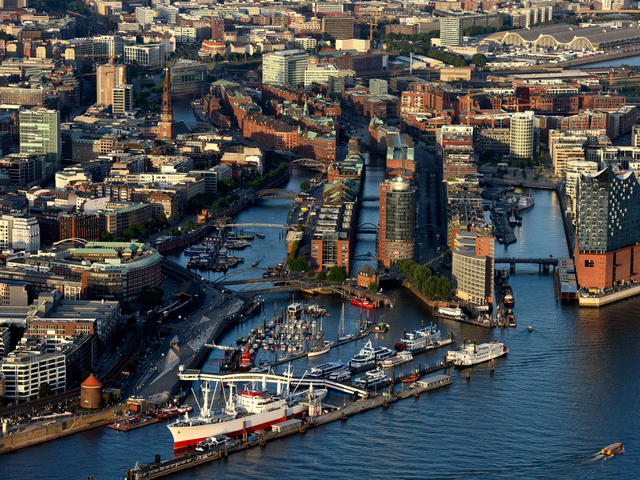
Hamburg is Europe's second largest port.  It handles large, ocean-going ships, so it's considered a seaport, even though it's nearly 70 miles (110 km) inland from the North Sea on the Elbe River at its confluence with 2 other rivers.
The Elbphilharmonie is in a unique location in Hamburg’s historic port.  It's part of Europe’s largest inner-city urban revitalization project, in direct proximity to the Speicherstadt warehouse district UNESCO World Heritage site. 
In location, in design, and in function, the Elbphilharmonie serves as a symbol of the city’s past, present and its future.

Spectacular Architecture

The renowned Swiss architecture firm Herzog & deMeuron designed the exciting structure to perch on top of a brick warehouse that used to store tea, tobacco and cocoa arriving from abroad. 1700 reinforced concrete piles support the modernist, glass structure, whose wave-like roofline rises above the water of the port that surrounds it on three sides.
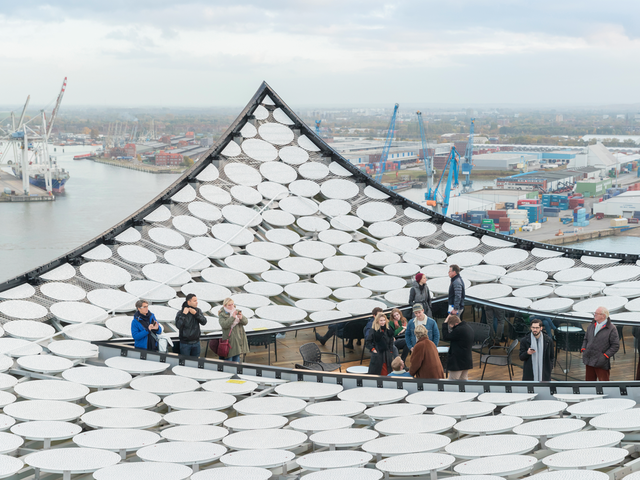
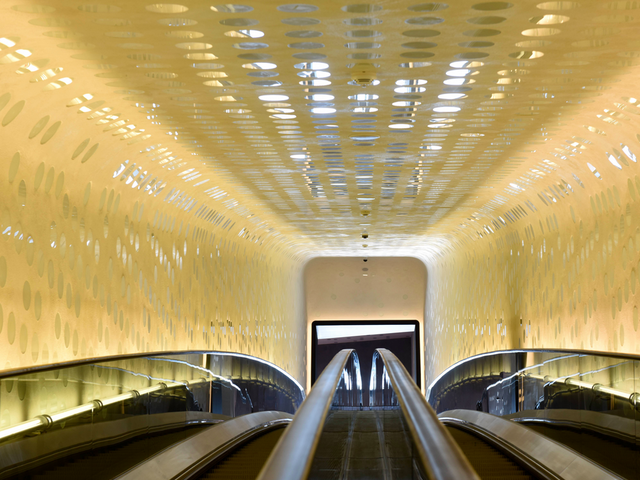
The Plaza is the area that links the warehouse and the new structure, and it's the central meeting place in the Elbphilharmonie. There's a viewing platform here that's open to the public. Even getting to it is an experience: an 82-metre-long (over 250 foot-long) curved escalator transports visitors through the building. Once you get there, you have a stunning panoramic view over the city and port of Hamburg.

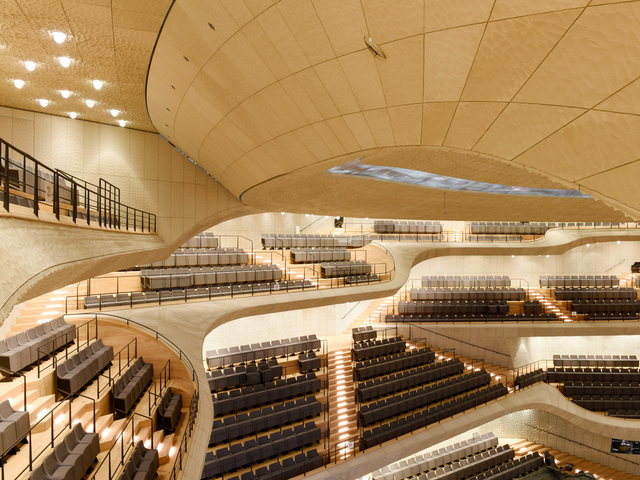
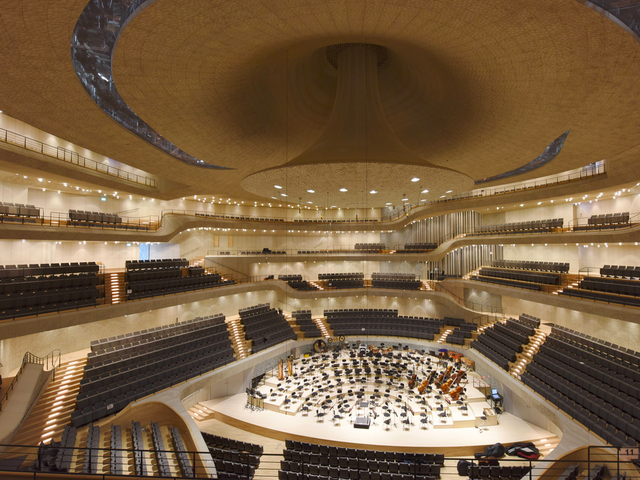
The heart of the Elbphilharmonie is the spectacular, Grand Concert Hall. 2,100 seats are arranged around a centrally located stage, designed to remind you of visits to terraced vineyards. Amazingly, no member of the audience is seated more than 30 metres (about a hundred feet) from the conductor. Being so unusually close to the action turns this new acoustic space into a place of unforgettable musical encounters.
In order to achieve optimum acoustics, the architects developed a special wall and roof structure together with internationally renowned acoustician Yasuhisa Toyota. 10,000 individually shaped fibre panels cut with millimetre precision ensure targeted sound distribution that reaches you in every corner. For the Grand Hall, the German organ builder Klais developed an extraordinary concert hall organ with 4,765 pipes that are located in, next to and even behind the audience stands.

A Boundless Music Experience

In addition to the one-of-a-kind Grand Hall, the complex includes the acoustically outstanding, wood paneled Recital Hall and The 'Kaistudios', the Elbphilharmonie’s interactive music education area for people of all ages. The 'Kaistudios' are also home to the new 'Elbphilharmonie World of Instruments': diverse workshops in which children and adults can try out instruments from all over the world.
Are you thinking this all sounds fantastic, but you really aren't a fan of classical music? Don't fear: there's a line up of concerts and performances that not only include orchestral and operatic performances with the best orchestras in the world; piano, string quartet and German 'lieder'; but also world music, popular, and even electronic music.   Music for every fan, and a reflection of a city that not only supported famous composers, but also has had a world-celebrated club scene since the earliest days of the Fab Four.
They call it 'a perfect symbiosis of architecture and music'.  We agree.  The new Elbphilharmonie highlights Hamburg on the map of must-see global destinations for lovers of music and celebrated modern design.

Start your Trip!

Sunday, 5 February 2017

Shades of Northern Ireland

Shades of Northern Ireland


1. Northern Ireland completes the story of Ireland. Not visiting 'The North' is a bit like deciding to skip the season finale of your favourite TV show. 
2. It is the most beautiful part of the Emerald Isle. 
3. By visiting Northern Ireland we are actively supporting 18 years of peace. Tourism is one of the most important drivers of Northern Ireland's economic growth, and steady tourism is necessary to provide continued economic, social and political stability. 
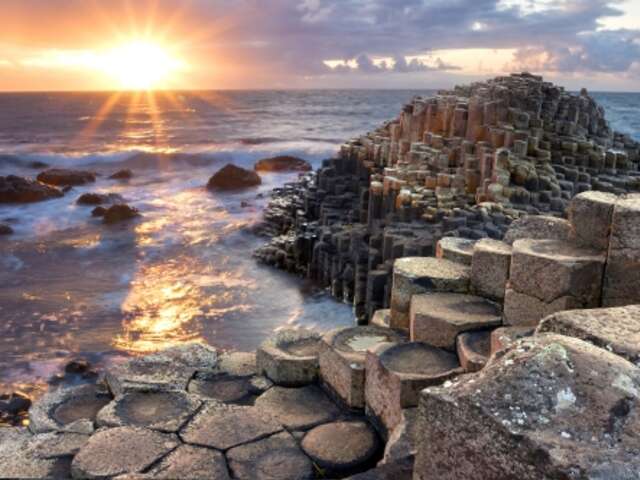
 4. It's home to the Giant's Causeway, The Glens of Antrim, Game of Thrones, the Walled City of Derry (my favourite city – forget Dublin!), Liam Neeson, Titanic, St. Patrick, the Ejector Seat and the Delorean, C.S. Lewis, HARP, Bushmills whiskey, Air Conditioning, Rory Mcllroy, and the penalty kick!  
5. Our passengers are 'living history' when they visit Northern Ireland. Thirty or forty years ago, you'd be considered quite a daredevil if you went to Northern Ireland. Consider Northern Ireland somewhat similar to the unveiling of the 'Iron Curtain' after the collapse of the Soviet Union. American tourists flocked to catch a glimpse of the 'forbidden' cities of Prague, East Berlin, Budapest and St Petersburg. For many, a visit to Northern Ireland has this same sense of 'peaking behind the curtain' of a once off-limits destination now open – and safe – to explore. 
6. BUT MOST IMPORTANTLY, Northern Ireland is proof that good triumphs over evil, tolerance over prejudice, and love over hate.
Diana Ditto, one of Collette's Product Managers, has been travelling all her life. You can find her seeking out the best of Ireland, Scotland, England and beyond. If you see her out on the road be sure to say hello and raise a glass of Guiness.  Blog copy used with permission from Collette.

Monday, 30 January 2017

Happy New Year

Happy New Year!  2017 is ramping up to be an exciting year of travel. So we thought we'd share stories about the hottest travel trends that are going to impact where - and how - you travel in the coming months and even years. What do we see in our crystal ball/ champagne glass?  
Whether you're planning family, 'bleisure' (business/leisure), solo, romantic or couple travels, gal or pal getaways, from the uber luxurious to the economical, 2017 travel will be all about:
  • Wellness and Adventure: Getting outdoors and being active, returning more healthy than when you left, doing something other than pounding pavement or cobblestones every day...  visitors have more and more new, healthy and adventurous (not necessarily dangerous!) ways to experience destinations.
  • Cuba: Travel to Cuba has changed forever now that relations with the US are normalizing. If you haven't already been, there are even more ways to explore one of the world's last restricted travel areas.
  • New Cruise Ships: Ocean or river, luxury or expedition, new cruise ships, with itineraries, designs, amenities, activities and celebrity entertainment or culinary partnerships that battle to outdo each other just keep on coming!  What WILL they do next on a ship? We'll keep you abreast of all the latest developments. If you're one of the last few people who still thinks cruising is about 'blue hair and buffets', you should take a look at the latest generation of cruise ships... and passengers.  There really is a cruise out there for every traveler.
  • Celebrations: Canada commemorates its 150th birthday in 2017, and it's also riding a wave at the top of nearly every 'best place to travel' list.  Did you know as many Americans travel to Canada every year as go to all of Europe?  And with the dollar and other considerations, it's never been a better year for vacationing close to home.  So throughout 2017, we're going to share some of our favorite stories about Canada to inspire your travels. 
  • Local and authentic: Local food, local artisans... everyone is looking for authentic, local production, creation, and consumption. There's a global awareness that we're all looking to be more connected with each other and the items we consume.  Products with provenance and people with passion and rejuvenated cities and neighbourhoods.  There's more and more of it out there to discover.
  • Connecting: Staying connected with those at home, and connecting with the people, Nature, and wildlife where you're traveling.
  • Customization:  It's never been easier to work with a travel expert to craft a trip of your dreams.  In the past, it may have been harder to tweak a trip to get exactly what you want, but a new age of crafting travel itineraries is upon us, at every price point.  If you're just saying 'yes' and dropping down your credit card, you're missing out.
We want to inspire your travel imagination in 2017... and then make those dreams come true!
Safe and memorable travels in 2017!

Thursday, 5 January 2017

A Wee Dram in Aberdeen: Consider a Visit to these Distilleries

  • Strathisla Distillery

Seafield Avenue, Keith, Banffshire
With its distinctive pagodas, cobbled courtyard and picturesque buildings, Strathisla Distillery is arguably the most beautiful distillery in Scotland. Founded in 1786, it is also the oldest operating distillery in the Scottish Highlands.
  • The Glenfiddich Distillery

Dufftown, Moray
World famous working distillery. On Christmas Day in 1887, William Grant watched proudly as the first spirit ran from the stills at Glenfiddich Distillery. Five generations later the distillery is still owned and managed by the Grant family. Glenfiddich is unique in the fact that it is the only Highland Single Malt that is distilled, matured and bottled at its own distillery.
  • Balvenie Distillery

Dufftown
The Balvenie is unlike all other single malt Scotch whiskies, thanks to a unique combination of human craft and natural alchemy. Neither the craft nor nature’s mysteries have changed in over a century. A visit to the distillery in Speyside, Scotland, brings this all to life.
  • Speyside Cooperage Visitor Centre

Craigellachie, Aberlour, Banffshire
No visit to Speyside would be complete without a visit to the Speyside Cooperage, the only cooperage in Britain with a Visitor Centre. Here you can watch the coopers make and repair the barrels for the whisky industry.
  • Royal Lochnagar Distillery

Crathie, Ballater, Aberdeenshire
Royal Lochnagar distillery is situated on the south side of the River Dee close to Balmoral Castle. Age old traditions and craftsmanship produce one of Scotland's most exclusive whiskies. A visit to Royal Lochnagar is a timeless experience. Visitors can see distillers tending to the traditional mash-tun and gleaming copper stills. At the tour end, a complimentary dram will confirm that Royal Lochnagar is a malt whisky worthy of the "Royal" prefix to its name.

Sunday, 1 January 2017

Five myths about travel Consultants


by Everett Potter, Special for USA TODAY
Mention the phrase "travel agent" to many travelers, regardless of age, and they can't imagine why they would ever use one. It's easier and faster than ever to book a hotel, airline ticket or car rental online, and there are user reviews everywhere, so why would anyone need an agent? We found out when we looked at some of the myths about how they work.
1. I can easily book the same trip on my own without using a travel agent.
Sure, you can book a trip yourself, but it may not be the same trip that you'd get through a travel agent.
"If they book it themselves, they're just a credit card number" to a travel supplier, says Anne Morgan Scully, president of McCabe World Travel, a Virtuoso agency in McLean, Va. "I make a point of knowing the general manager of the hotel where they might be staying and I usually call the GM the night before one of my clients arrives and see if they might be upgraded. If they book with a good agent, they're known on arrival."
 Agents are especially useful on specialized trips, whether it's a honeymoon, a cruise or an adventure travel vacation.

"Anyone can book a hotel room and a rental car but I sell romantic trips and adventure travel to Africa," says Jonathan Haraty of Jon's Dive & Travel Services in East Longmeadow, Mass., a Tripology agency. "Do you want to take a chance on booking your own hotel or safari camp in Africa? Will someone be there to pick you up in the airport in Nairobi? I know people who've been stranded when they arrive. That's one reason you need an agent."
"They can read all of the hotel and resort reviews on the Web that they want," he says. "But will they really be happy at an all-inclusive resort? Do they plan to go out every night? What kind of room do they really want? The answers aren't readily available on the internet."
"It's simply knowing who to call," says Scully.
And when you're stranded because of a canceled or delayed flight, there's nothing like e-mailing or texting your travel agent to get you on another flight. They can often do it much faster than the airline.
2. I can get cheaper prices online than I can when booking through a travel agent.
"You could be correct," Scully demurs, "But it's not what you pay walking in the door, it's what you pay when you leave."
She's referring to the upgrades that a good agent can get for a client, upgrades based on a relationship with a hotel, a cruise line or a tour operator. Agents who send clients to the same properties get to know the staff. The hotels and cruise lines, for example, want repeat business, and might reward the agent's clients with perks like a room or cabin upgrade or a bottle of champagne. It could be complimentary breakfast during a stay or even a spa credit. These are much more than niceties. The value can add up quickly when the hotel in question is charging $25 or much more per person for breakfast or hundreds of dollars more per night for a larger room category. Scully says that even if a client finds a good price at hotel, she can often make a call and get a perk or two thrown in to sweeten the deal.
3. Travel agents steer you to hotels or cruise lines where they get a higher commission.
Not true, says Scully, who says that "we wouldn't keep our clients if we did that."
Instead, she plays what she calls "The Match Game," developing a relationship with a client and learning what their tastes are.
"I could be getting a huge commission from some cruise line but if the client isn't a fit, it doesn't make sense," she says. "It's all about finding the perfect match."
4. Travel agents charge surcharges and fees on top of the price.
Some certainly do. Travel agents get paid on commission by hotels, airlines and resorts, but many more are charging fees on top of that because of their time. Putting together an itinerary, particularly one involving a complicated trip, like a safari, or booking multiple tickets and transfers for an extended family vacation, is a lot of work. Charging a fee is a bit of insurance for all of the time and effort put into creating an itinerary in the event that a client ends up canceling.
"You could spend three weeks creating an itinerary and then a client could take it and shop it around for the lowest price," says Haraty. "When I plan a trip to Africa, it could be 100 e-mails back and forth, multiple phone calls, and two months before its finalized."
That said, everyone handles fees differently. Some agencies charge fees up front and then drop the fees when the client actually books.
5. All travel agents are the same.
"Absolutely not," says Scully. "It's like picking a lawyer, doctor or dentist. They need to be right for you and certified by the right organizations. I think people have to realize we are counselors and concierges and lifestyle planners. People should choose a travel planner the way they choose a financial planner."